 Fashion Brief
Foundation / Foundation and Empire / Second Foundation (The Foundation Trilogy)
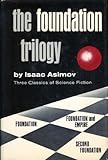
- Hardcover
All three novels in the original classic trilogy, published together here for the first time in a SFBC omnibus edition with the classic checkerboard DJ.

Price:
All three novels in the original classic trilogy, published together here for the first time in a SFBC omnibus edition with the classic checkerboard DJ.
Price:
Tagged with: Empire Foundation Second Trilogy


Epic,
This book and the rest in the series take place far in the future (allegedly 50,000 years) at a time when people live throughout the Galaxy. A mathematician Hari Seldon has developed a new branch of mathematics known as psychohistory. Using the law of mass action, it can roughly predict the future on a large scale. Hari Seldon predicts the demise of the Galactic Empire and creates a plan to save the knowledge of the human race in a huge encyclopedia and also to shorten the barbaric period expected to follow the demise from 30,000 years to 1,000 years. A select people are chosen to write the Encyclopedia and to unknowingly carry out the plan to re-create the Galactic Empire. What unfolds in this book and in the books that follow is the future history of the demise and re-emergence of a Galactic Empire, written as a series of adventures, in a similar fashion to the Star Wars series.
Even though this is arguably the greatest set of Science Fiction novels ever written, I do not recommend it to those who are only mildly interested in Science Fiction. Character development is not the focus of these novels and the large amount of technical/scientific details, schemes and plots can become both confusing and heavy for the unitiated Science Fiction reader. If you read this one you will feel the need to read the others which may take a long time. If you are new to Science Fiction start with something lighter and when you are hooked you can continue with this series. Also, in my opinion the second and third books were better than the first.
0
Was this review helpful to you?

|