 Fashion Brief
Foundation: The History of England from Its Earliest Beginnings to the Tudors
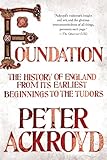
The first book in Peter Ackroyd’s history of England series, which has since been followed up with two more installments, Tudors and the forthcoming Rebellion.
In Foundation, the chronicler of London and of its river, the Thames, takes us from the primeval forests of England’s prehistory to the death, in 1509, of the first Tudor king, Henry VII. He guides us from the building of Stonehenge to the founding of the two great glories of medieval England: common law and the cathedrals. He shows us glimpses of the country’s most distant past—and Neolithic stirrup found in a grave, a Roman fort, a Saxon tomb, a medieval manor house—and describes in rich prose the successive waves of invaders who made England English, despite being themselves Roman, Viking, Saxon, or Norman French.
With his extraordinary skill for evoking time and place and his acute eye for the telling detail, Ackroyd recounts the story of warring kings, of civil strife, and foreign wars. But he also gives us a vivid sense of how England’s early people lived: the homes they built, the clothes the wore, the food they ate, even the jokes they told. All are brought vividly to life through the narrative mastery of one of Britain’s finest writers.
The first book in Peter Ackroyd’s history of England series, which has since been followed up with two more installments, Tudors and the forthcoming Rebellion.
In Foundation, the chronicler of London and of its river, the Thames, takes us from the primeval forests of England’s prehistory to the death, in 1509, of the first Tudor king, Henry VII. He guides us from the building of Stonehenge to the founding of the two great glories of medieval England: common law and the cathedrals. He shows us glimpses of the country’s most distant past—and Neolithic stirrup found in a grave, a Roman fort, a Saxon tomb, a medieval manor house—and describes in rich prose the successive waves of invaders who made England English, despite being themselves Roman, Viking, Saxon, or Norman French.
With his extraordinary skill for evoking time and place and his acute eye for the telling detail, Ackroyd recounts the story of warring kings, of civil strife, and foreign wars. But he also gives us a vivid sense of how England’s early people lived: the homes they built, the clothes the wore, the food they ate, even the jokes they told. All are brought vividly to life through the narrative mastery of one of Britain’s finest writers.

Price:
Prelude to Foundation (Foundation, Book 1)
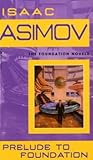
It is the year 12,020 G.E. and Emperor Cleon I sits uneasily on the Imperial throne of Trantor. Here in the great multidomed capital of the Galactic Empire, forty billion people have created a civilization of unimaginable technological and cultural complexity. Yet Cleon knows there are those who would see him fall – those whom he would destroy if only he could read the future.
Hari Seldon has come to Trantor to deliver his paper on psychohistory, his remarkable theory of prediction. Little does the young Outworld mathematician know that he has already sealed his fate and the fate of humanity. For Hari possesses the prophetic power that makes him the most wanted man in the Empire… the man who holds the key to the future – an apocalyptic power to be know forever after as the Foundation.
List Price: $ 7.99
Price: $ 3.66


Very interesting reading,
Perhaps he does sometimes draw firm conclusions in places where scholars argue otherwise, or where the jury is still out. Frankly, I don’t care. I’m not looking for rock-solid detail, backed by endless footnotes and cross-references. If I were, I’d turn elsewhere. Instead, I was interested in finding a coherent narrative that would help knit together the bits and pieces of English history of which I had already read. “Foundation” is that narrative.
I’m looking forward to his work on the Tudors.
0
Was this review helpful to you?

|Fairly Enjoyable,
Ackroyd’s style is a bit eccentric, and it sometimes results in odd sentences and odd punctuation, but it’s not dry.
I have one big complaint about the Kindle edition, which is what I read. When I got to the end, I saw that there was a list of illustrations/photos, but only a list–no illustrations or photos. There’s absolutely no reason why the publisher couldn’t include these in the ebook version (unless they are actually there and I just can’t find them–which is just as bad). That’s just inexcusable.
0
Was this review helpful to you?

|Foundation is the exciting chronicle of England from prehistoric times through the reign of King Henry VII,
Ackroyd presents all the major politcal events in the long pageant of British history culminating in the first Tudor King Henry VII. Volume II will begin with the reign of Henry VIII. Ackroyd:
a. Succinctly summarizes the reigns of British monarchs. Especially interesting were the reigns of William the Conqueror who defeated Harold in 1066 establishing Norman power in England. The Plantagenet dynasty ruled England for centuries. Also of interest were the reigns of Henry II who had Archbishop Thomas a Becket murdered; Richard I the Lionheart and King John.
b. Several battles are analyyzed from Hastings to Agincourt to the dynastic War of the Roses in the calamatious 14th century.
c. Many chapters report on the way people lived in the Medieval period including the daily schedule of a market town; the food which was eaten; trade and roads; religious beliefs and English law. The Black Death and the strong movement towards a centralized government in London are given attention by the author.
Some of Amazon critics have attacked the book for being boring but this is wrong! The book is a popularly written account spotlighting the basic data needed by a literate person to buttress understanding of how England evolved over the centuries. The book is not a detailed history but serves to whet one’s interest in British history and life. A bibliography is provided by Ackroyd for those who would wish to read and learn more.
d. Ackroyd writes in a lively style one would expect of a novelist. He is able to keep the reader’s interest. However, reigns and battles can become tedious reading. The book is best if it slowly read aiding comprehension of such a vast subject.
The long book contains many memorable quotable quotes. Among them:
“The building of Stonehenge was the largest and most protracted programme of public works in the history of England.” (p.10)
“Trade is the key to the growth of civilizations”- (p. 15)
“The country village was not some comfortable and affable idyll; for its poorest residents it was a form of outdoor prison”-p.
(73)
“The church was not always used for sacred purposes. The contemporary literature suggests that it might be a meetingplace, a covered market or even an alehouse.”-(p. 75).
“The objects of medieval life are still recovered from the ground…wooden stools…two locks…Medieval life was dominated by the key.”-(p. 95)
“The origins of the manor are still a matter of debate.”-p.(106).
“The instincts of the Anglo-Norman lords was for battle;like the salamander, they lived in fire.”-(p. 123)
“Life for the majority of the English people was nasty, brutish and short.”-(p. 235). Ackroyd is here commenting on the Black Plague of the 14th century.
“Foundations” has whetted my taste for continuing to study volume II and learn more about the great English nation. Plaudits to Peter Ackroyd for his fine book!
0
Was this review helpful to you?

|The Fall of the Empire… and the Start of the Foundation, 3-1/2 stars, 403 Pages, Publ 1988,
There are two type of readers that would be potentially interested in reading this book for the first time: those that have read the traditional Foundation series and are wondering if they should continue here with this prequel, and those that haven’t read the originals and are wondering if they should start here. For the former, sure with the understanding that Asimov’s style will be different 40 years after he wrote the novellas of the original series, and for the former, no, I would start with Asimov’s original Foundation trilogy. His original series is almost essential 40’s/50’s science fiction, and if one doesn’t like that series, one is not going to care about the characters and events in Prelude To Foundation.
From the Author’s Note and adding Forward The Foundation which was written afterwards (I may have left out a book or two), there are 15 books (a quint-decology?) in Asimov’s universe. They are:
1. The Complete Robot (includes every story of I, Robot)
2. The Caves of Steel
3. The Naked Sun
4. The Robots of Dawn
5. Robots and Empire
6. The Currents of Space
7. The Stars, Like Dust–
8. Pebble in the Sky
9. Prelude to Foundation
10. Forward the Foundation
11. Foundation
12. Foundation and Empire
13. Second Foundation
14. Foundation’s Edge
15. Foundation and Earth
Books 1 to 5 are Asimov’s Robot series, books 6-8 his Empire series, and books 9 to 15 his complete Foundation series. They were initially separate series, but he used books 5, 9, and 10 to encompass them all into one series.
0
Was this review helpful to you?

|The beginning book of the famous Foundation series.,
0
Was this review helpful to you?

|A fascinating starting point,
0
Was this review helpful to you?

|